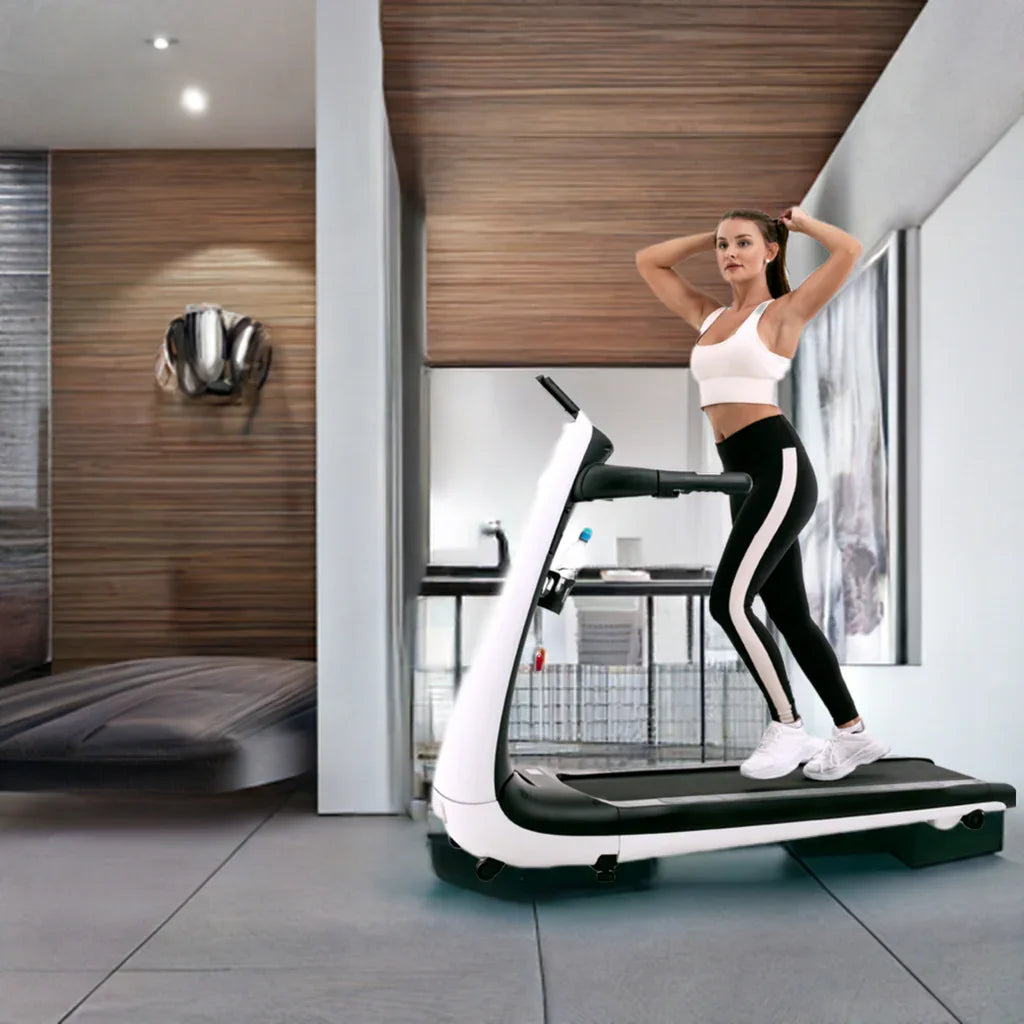
Many people begin Tai Chi-inspired walking with a clear intention: slower steps, careful posture, and smooth rhythm. Over time, something interesting happens. That mindful way of moving starts to feel natural — and it quietly carries over into everyday treadmill walking.
This transition doesn’t require a change in mindset or effort. It happens because the body learns rhythm first. Once rhythm is established, walking becomes steadier no matter the pace.
Why Tai Chi Walking Transitions So Naturally
Tai Chi-inspired walking focuses on how movement feels rather than how it looks. Attention stays on balance, weight transfer, and posture. These are not special techniques — they are the foundations of all good walking.
When those foundations become familiar, everyday treadmill walking starts to feel different. Steps feel smoother. Posture feels more upright. Movement feels less rushed, even when the pace increases slightly.

What Changes When Mindful Walking Becomes Habit
The goal of Tai Chi-inspired walking isn’t to stay slow forever. The goal is to move well. Once that quality of movement is established, pace becomes flexible.
- Steps feel more even and controlled
- Posture stays upright without effort
- Rhythm remains steady as pace changes
- Walking feels calmer and more reliable
This is why many people find that Tai Chi-inspired walking quietly reshapes how they walk every day — not just during focused sessions.
Bringing Mindful Awareness Into Everyday Walking
You don’t need to label your walk as “Tai Chi” to benefit from it. Once awareness is built, it becomes part of normal movement.
A simple way to carry this forward on a treadmill is to begin each session slowly. Give your body a few minutes to settle into rhythm before increasing pace. This brief transition keeps movement smooth rather than abrupt.

Everyday Walking Without Losing Balance or Rhythm
As walking becomes part of daily life, it’s easy to slip back into autopilot. The key difference for people who start with Tai Chi-inspired walking is that awareness lingers.
Even during casual treadmill sessions, there’s a quiet sense of balance: how the feet land, how the body aligns, how the rhythm stays even. Walking feels less mechanical and more grounded.
This is where mindful walking becomes sustainable — not because it requires effort, but because it feels better.
How a Home Treadmill Supports This Transition
A treadmill provides consistency. The surface doesn’t change, the pace is adjustable, and the environment stays familiar. This makes it easier to maintain the same walking quality from one session to the next.
For many people, using a compact treadmill designed for walking-first routines helps bridge the gap between mindful practice and everyday movement.
Instead of separating “practice walking” from “normal walking,” both become part of the same routine.
How This Fits With Other Walking Approaches
This transition often follows a natural path. Some people begin with Tai Chi-inspired walking habits, develop steadiness through balance-focused treadmill walking, and then carry that awareness into everyday routines.
Each step builds on the last — without forcing change.
FAQ
Do I need to keep walking slowly forever?
No. Tai Chi-inspired walking teaches movement quality. Once learned, it naturally carries into everyday walking at different paces.
Can mindful walking work with normal treadmill speeds?
Yes. Awareness of posture and rhythm can remain even as pace increases slightly.
Is this suitable for daily treadmill use?
Yes. The approach is designed to feel natural and repeatable, making it well suited to daily routines.
Does this replace normal treadmill walking?
No. It enhances it by bringing steadiness and balance into everyday movement.