

How much should you walk every day after turning 50? Is 20 minutes enough? Should you aim for 10,000 steps? And does walking on a treadmill count just as much as walking outdoors?
These are common questions for people who want to enjoy an active lifestyle without turning exercise into a complicated daily commitment.
The encouraging news is that walking is one of the most accessible ways to introduce more movement into your routine. Whether you enjoy a morning stroll, a lunchtime walk or the convenience of a treadmill at home, there are plenty of ways to make walking part of everyday life.
In this guide, we explore how much walking to aim for after 50, how to find a comfortable pace and how to make daily walking more enjoyable.

How Much Should You Walk Every Day After 50?
For adults aged 50 and over, a useful starting point is to consider the UK's physical activity guidelines.
The NHS recommends that adults aim for at least 150 minutes of moderate-intensity physical activity per week. Brisk walking is one example of an activity that can contribute towards this target.
That works out at approximately:
- 30 minutes a day, five days a week.
- 25 minutes a day, six days a week.
- About 22 minutes a day, seven days a week.
These are examples of how to distribute 150 minutes across a week, rather than fixed daily requirements.
If you are just beginning, shorter walks may be a more practical starting point. The important thing is to choose an amount of activity that reflects your current ability and build gradually.
Walking is also only one part of an active lifestyle. UK guidance recommends including muscle-strengthening activities at least twice a week, with additional balance and flexibility activities particularly important for adults aged 65 and over.
Read the NHS physical activity guidelines for adults aged 19 to 64 and the guidelines for adults aged 65 and over.
Is Walking 30 Minutes a Day Enough?
Thirty minutes of brisk walking on five days each week is one straightforward way to reach the recommended 150 minutes of moderate activity.
However, there is no need to complete all 30 minutes in a single session.
For example, you might prefer:
- A 10-minute walk after breakfast.
- A 10-minute walk during your lunch break.
- A 10-minute walk in the evening.
For someone with a busy schedule, dividing walking into shorter sessions may feel more manageable than setting aside a longer uninterrupted period.
Remember that a gentle stroll and a brisk walk are not necessarily the same intensity. The amount of walking that counts towards a moderate-intensity activity target depends on how much effort it requires for you personally.
How Fast Should You Walk After 50?
There is no single walking speed that suits everyone over 50.
Some people enjoy leisurely walking, while others prefer a faster pace. Fitness experience, personal preferences and individual circumstances all influence what feels comfortable.
The NHS describes brisk walking as roughly 3 miles per hour, or approximately 4.8 km/h, although this is a general guide rather than a required speed.
The Talk Test: A Simple Way to Judge Your Pace
One practical way to recognise moderate-intensity activity is the talk test.
During moderate activity, you will usually breathe a little faster and feel warmer. You should still be able to talk, although singing comfortably may become difficult.
This makes the talk test a useful guide when walking outdoors or using a home treadmill.
Rather than concentrating on achieving a particular speed, choose a pace that suits your experience and exercise preferences.
How Many Steps Should You Walk After 50?
The familiar target of 10,000 steps per day has become popular, but it is not a universal requirement.
Daily step counts vary considerably depending on occupation, lifestyle, walking speed and existing activity levels.
For someone who spends much of the day sitting, gradually increasing their usual step count may be a more practical goal than immediately attempting 10,000 steps.
Instead of focusing exclusively on a number, consider how often you walk, how long you spend moving and whether your routine is enjoyable enough to maintain.
A treadmill with a built-in display can make it convenient to follow your walking distance, exercise time and step information.
How to Start a Walking Routine After 50
Beginning a walking routine does not need to involve complicated training plans.
Choose a time of day that fits naturally into your schedule and begin with a comfortable duration.
An Example Four-Week Walking Plan
The following is an illustrative progression for someone who is comfortable walking and wants to develop a more regular habit. It is not a prescribed programme, and there is no need to increase the duration until the current level feels manageable.
| Week | Walking Duration | Suggested Approach |
|---|---|---|
| Week 1 | 10 minutes | Comfortable walking on selected days |
| Week 2 | 15 minutes | Maintain a comfortable, consistent pace |
| Week 3 | 20 minutes | Introduce some brisk walking if appropriate |
| Week 4 | 25–30 minutes | Choose a duration and pace that suit you |
These durations are examples, not compulsory targets. Walking at your existing comfortable level is preferable to rushing into a routine that does not suit you.
If you have not exercised for some time or have medical conditions or concerns, the NHS recommends speaking with your GP before starting.
Is Walking on a Treadmill as Good as Walking Outdoors?
Both treadmill walking and outdoor walking can contribute towards your weekly physical activity.
Outdoor walking offers changing scenery, natural daylight and opportunities to explore your local area.
Treadmill walking provides a different kind of convenience: you can choose when to exercise without depending on the weather, daylight hours or travelling to another location.
For many people, enjoying both options provides useful variety.
Why a Home Treadmill Can Make Daily Walking Easier
Imagine finishing work on a cold November evening. It is already dark, rain is falling and the idea of heading outdoors is not particularly appealing.
Having a treadmill at home gives you another option.
You can enjoy a walk while listening to music, catching up on a favourite programme or simply taking some time for yourself.
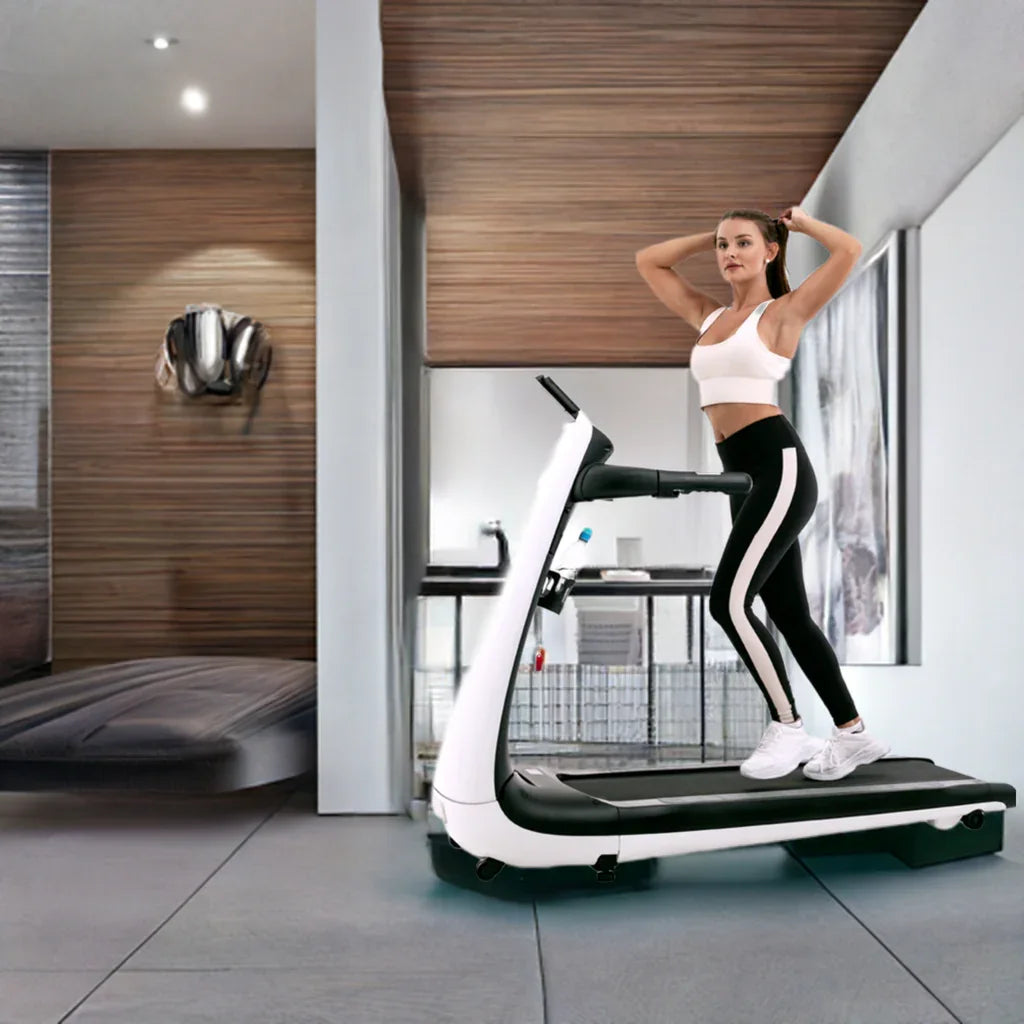
The Fuji BeHealthy Smart Treadmill has been designed to make walking and running at home convenient, combining a modern appearance with practical features for everyday exercise.

Choosing a Comfortable Treadmill for Walking at Home
If you are considering a treadmill for regular home walking, several practical features are worth looking for.
1. Adjustable Walking Speed
Being able to select your preferred pace is an important part of an enjoyable treadmill experience.
The Fuji BeHealthy offers adjustable speeds from 1 to 12 km/h, accommodating a range of walking, brisk walking and running preferences.
2. A Comfortable Running Platform
The surface beneath your feet contributes to the overall feel of a treadmill.
BeHealthy features a four-layer running belt and an Intelligent Cushioning System, developed to provide a comfortable walking and running experience.

3. Easy-to-Read Workout Information
Many people enjoy following their progress during a walking session.
BeHealthy includes an integrated LED touch screen displaying workout information such as time, speed, distance, steps and calories.
These features make it convenient to follow your session without relying on a separate fitness device.
4. A Compact Design for the Home
Not everyone has a dedicated exercise room.
A compact folding treadmill can be particularly appealing for smaller houses, flats and multipurpose living spaces.
BeHealthy combines a streamlined design with a folding mechanism that reduces its footprint when stored.

The treadmill can also fold flat, offering another convenient storage configuration.

5. Ready-Assembled Convenience
Setting up a home exercise routine should not require hours of complicated assembly.
The Fuji BeHealthy Smart Treadmill arrives ready built, allowing you to prepare it for use without a lengthy installation process.
Its contemporary design also makes it an appealing choice for people who want exercise equipment that complements their home rather than dominating the room.
Morning Walking or Evening Walking: Which Is Better?
The best time to walk is often the time that fits most comfortably into your daily routine.
Some people prefer walking in the morning before the day becomes busy. Others enjoy an afternoon break or a relaxing evening session.
Rather than worrying about finding the perfect time, consider when you are most likely to enjoy walking regularly.
For people working from home, a short treadmill walk during a break can offer a convenient change from sitting at a desk.
For those with busy mornings, an evening walking session may be more appealing.
Five Ways to Make Daily Walking More Enjoyable
Developing a regular walking habit is often easier when the experience is something you genuinely look forward to.
- Listen to your favourite music. Create a playlist that makes your walking sessions enjoyable.
- Explore different routes. When walking outdoors, try discovering new parks, streets and local attractions.
- Walk with a friend. Make walking a social activity whenever practical.
- Track your progress. Follow your walking time or distance without becoming overly focused on numbers.
- Keep your routine flexible. Enjoy outdoor walks when the weather is pleasant and indoor walking when it is more convenient.
Frequently Asked Questions About Walking After 50
How many minutes should a 50-year-old walk every day?
UK guidance recommends at least 150 minutes of moderate-intensity activity per week for adults. Walking briskly for approximately 30 minutes on five days each week is one way to reach that target. Beginners can start with shorter periods and build gradually.
Is 20 minutes of walking a day worthwhile?
Yes. Twenty minutes of walking can be a practical addition to an active routine. If the walking is at moderate intensity, 20 minutes every day contributes 140 minutes towards the weekly 150-minute guideline.
Do I need to walk 10,000 steps every day?
No. Ten thousand steps is not a universal daily requirement. A suitable activity goal depends on your current routine, ability and circumstances.
What speed should I use on a treadmill after 50?
There is no single treadmill speed recommended for everyone over 50. Select a pace that reflects your individual experience and comfort. The NHS talk test can help you recognise moderate-intensity walking.
Does treadmill walking count towards weekly exercise?
Yes. Treadmill walking can contribute towards weekly physical activity. Whether it counts as moderate-intensity activity depends on the effort involved, not simply whether you are walking indoors or outdoors.
Can I split my daily walking into shorter sessions?
Yes. Walking sessions can be spread throughout the day. Shorter sessions may be especially convenient for people balancing work, family commitments and other activities.
Is a folding treadmill suitable for a small home?
A folding treadmill can be a practical option for homes with limited space. The Fuji BeHealthy features both upright and flat-folding configurations, making it easier to accommodate exercise equipment within a modern living environment.
Make Walking After 50 an Enjoyable Part of Everyday Life
Walking after 50 does not have to involve complicated targets, expensive gym memberships or demanding exercise schedules.
For many people, the most practical approach is to find an enjoyable routine that fits naturally into everyday life.
Whether that means a morning walk through your neighbourhood, an afternoon stroll with friends or a convenient treadmill session at home, regular movement can become part of a fulfilling lifestyle.
At Fuji Health, we believe home exercise should be practical, stylish and enjoyable.
The BeHealthy Smart Treadmill combines a compact folding design, cushioned running platform, intuitive LED display and ready-assembled convenience to make walking and running at home a pleasure.
Ready to make walking at home part of your everyday routine?
Explore the Fuji BeHealthy Smart Treadmill
Editorial note: This article provides general lifestyle information based on UK physical activity guidance. Individual activity needs vary. If you have not exercised for some time or have medical conditions or concerns, consult your GP before starting a new exercise routine.